Clear PP vs Opaque White PP for Food Trays: Which One Should You Choose?
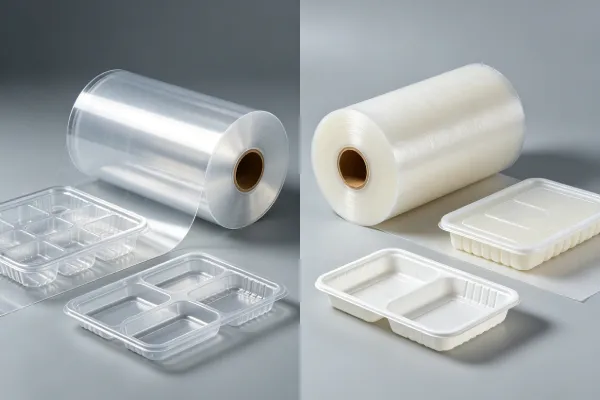
When sourcing polypropylene (PP) sheets for thermoformed food trays, one question comes up repeatedly:
Should you choose clear PP or opaque white PP?
At first glance, the decision seems simple. Clear PP allows consumers to see the product, while white PP offers a cleaner and more uniform appearance.
However, experienced packaging buyers know the choice affects much more than appearance. Material selection can influence shelf appeal, food protection, production efficiency, cost, and even consumer purchasing behavior.
After supplying PP thermoforming sheets to food packaging manufacturers, dairy packaging producers, and ready-meal tray converters, we have found that there is no universal answer. The best option depends entirely on the application.
In this guide, we compare clear PP and opaque white PP from a practical packaging perspective and explain how buyers make the decision in real-world production environments.
Understanding Clear PP and Opaque White PP
Both materials are based on polypropylene and share many advantages:
- Food-grade safety
- Excellent thermoforming performance
- Good chemical resistance
- Lightweight structure
- Microwave compatibility
- Recyclability
The primary difference lies in appearance and light transmission.
Clear PP
Clear PP allows partial or full visibility of the packaged product.
While it is not as crystal-clear as PET, modern clarified PP can achieve impressive transparency while maintaining PP's excellent heat resistance.
Typical applications include:
- Bakery packaging
- Fresh food containers
- Fruit trays
- Salad packaging
- Dairy packaging
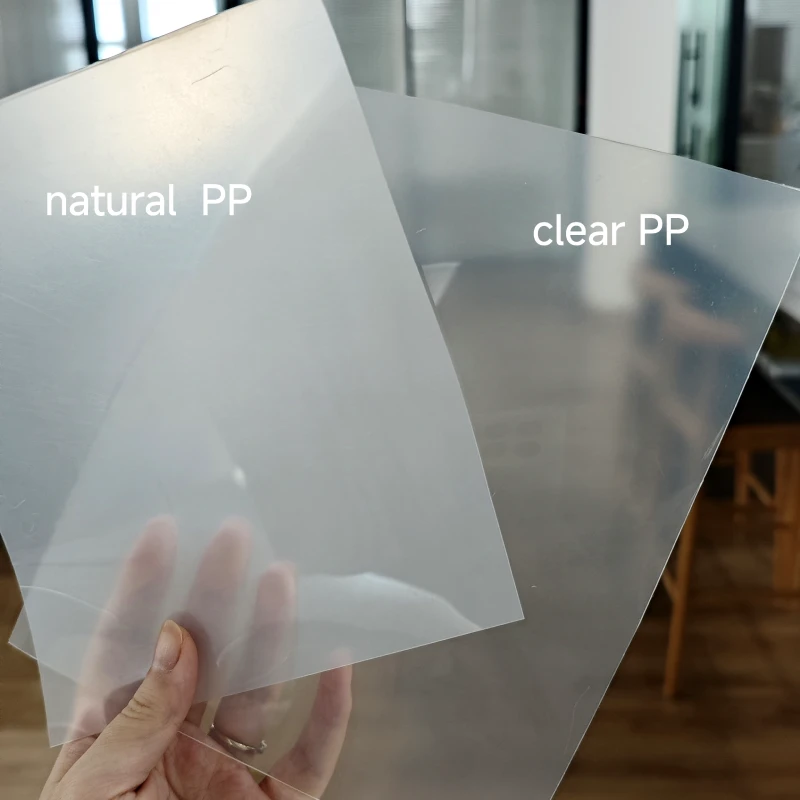
Opaque White PP
White PP contains pigments that create a solid, non-transparent appearance.
The material provides a clean and premium look while offering improved light-blocking properties.
Common applications include:
- Ready meal trays
- Frozen food trays
- Microwaveable food containers
- Dairy cups
- Industrial food packaging
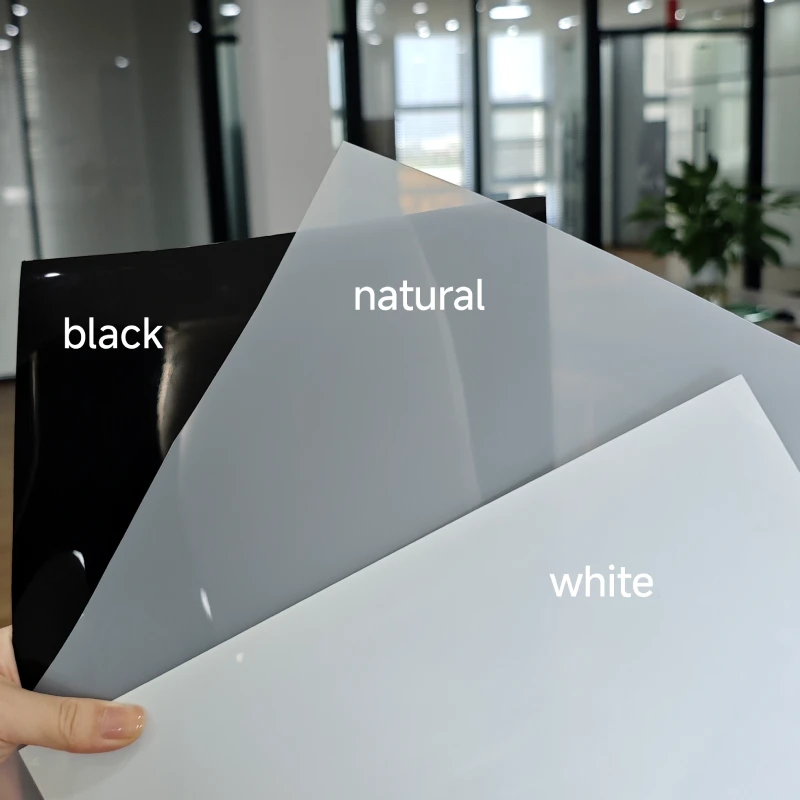
Why Many Food Brands Prefer Clear PP
Walk through any supermarket and you'll notice one obvious trend:
Consumers like to see what they are buying.
Product visibility creates trust.
A customer purchasing fruit, desserts, salads, or baked goods often wants to inspect freshness, color, and quality before making a decision.
Better Shelf Appeal
Transparent packaging allows the product to become part of the marketing.
Fresh strawberries, colorful salads, pastries, and prepared foods often sell better when consumers can see the contents.
Reduced Purchase Uncertainty
Consumers are less likely to question product quality when they can inspect the food directly.
Improved Product Presentation
Many premium food brands intentionally choose clear packaging because the product itself becomes the focal point.
For this reason, clear PP is often selected when visibility directly contributes to sales.
Why Many Manufacturers Choose White PP Instead
Despite the popularity of transparent packaging, white PP remains one of the most widely used materials in food tray production.
There are practical reasons for this.
Better Light Protection
Certain food products are sensitive to light exposure.
White PP helps reduce light transmission and can contribute to product protection during storage and transportation.
Cleaner Appearance
White trays create a uniform appearance regardless of product color.
This is particularly useful for:
- Frozen foods
- Ready meals
- Processed foods
- Meat alternatives
Improved Printing and Branding
Labels, graphics, and direct printing often stand out more clearly on a white background.
Packaging designers frequently prefer white trays because they provide a neutral canvas for branding.
Better Appearance After Microwave Heating
White PP tends to maintain a cleaner visual appearance after repeated heating cycles, making it popular for microwaveable packaging applications.
Which Material Performs Better During Thermoforming?
From a thermoforming perspective, both materials perform extremely well.
However, there are some practical differences.
Clear PP
Advantages:
- Attractive finished appearance
- High consumer acceptance
- Suitable for shallow and medium-depth trays
Considerations:
- Minor surface defects may be more visible
- Scratch marks can be easier to notice
White PP
Advantages:
- Surface imperfections are less noticeable
- Consistent visual appearance
- Excellent for large-scale production
Considerations:
- No product visibility
For many packaging manufacturers, white PP offers slightly more production tolerance because cosmetic defects are less visible.
Cost Considerations for Packaging Buyers
One of the most common purchasing questions is:
Is clear PP more expensive than white PP?
The answer depends on formulation, transparency requirements, and production volume.
In many cases, the price difference is relatively small.
However, buyers should evaluate more than material cost alone.
The real question is:
Which material helps sell the product more effectively while meeting performance requirements?
Saving a small amount on packaging material may not be worthwhile if reduced product visibility affects retail sales.
Likewise, choosing transparent packaging may not add value for products that consumers never inspect visually.
Procurement Guide: How to Choose Between Clear and White PP
When evaluating PP sheet for food trays, consider the following factors.
Choose Clear PP When:
✔ Product visibility influences purchasing decisions
✔ Freshness presentation is important
✔ Retail shelf appearance is a priority
✔ The food itself is visually attractive
✔ Premium packaging positioning is desired
Examples:
- Fresh fruit
- Bakery products
- Salads
- Desserts
- Deli foods
Choose White PP When:
✔ Light protection is beneficial
✔ Branding and label visibility are important
✔ Product visibility is not required
✔ Microwave heating is common
✔ Large-volume production consistency is critical
Examples:
- Frozen meals
- Ready meals
- Instant food trays
- Dairy packaging
- Industrial food packaging
Industry Trend: Many Brands Use Both
Interestingly, many food brands no longer choose one material exclusively.
Instead, they combine the advantages of both.
Common examples include:
- White PP tray + transparent sealing film
- White PP tray + clear lid
- White PP container + printed sleeve
This approach provides:
- Product protection
- Branding opportunities
- Product visibility
without sacrificing packaging performance.
What We See From Packaging Buyers
Based on our experience supplying PP thermoforming sheets to packaging manufacturers, most buyers no longer ask:
"Which material is better?"
Instead, they ask:
"Which material is better for my product?"
That shift is important.
Packaging success is rarely determined by a single property such as transparency or color.
The most successful projects evaluate:
- Product characteristics
- Retail environment
- Consumer expectations
- Production efficiency
- Packaging costs
- Sustainability goals
before selecting a material.
Frequently Asked Questions
Is clear PP as transparent as PET?
No. PET generally offers higher clarity than PP. However, clarified PP provides good transparency while offering better heat resistance.
Is white PP suitable for microwave applications?
Yes. White PP is widely used for microwaveable food trays and ready-meal packaging.
Which material is more recyclable?
Both clear and white PP are recyclable because they are based on polypropylene.
Is clear PP more expensive?
Not necessarily. Pricing depends on formulation, thickness, volume, and transparency requirements.
Which material is better for frozen food packaging?
White PP is often preferred because it provides a clean appearance and helps reduce light exposure.
Can clear PP be used for ready meals?
Yes, although many ready-meal manufacturers prefer white PP for branding and product presentation purposes.
What thickness is commonly used for PP food trays?
Typical thermoforming applications use PP sheet thicknesses ranging from 0.25 mm to 1.2 mm, depending on tray design and product weight.
Final Thoughts
There is no universal winner in the clear PP versus white PP debate.
Clear PP excels when product visibility drives purchasing decisions.
White PP excels when branding, consistency, and food protection are the primary concerns.
For most food packaging manufacturers, the best choice is the material that delivers the right balance of appearance, performance, processing efficiency, and cost for the specific application.
Before making a purchasing decision, evaluate how the tray will be used, how the product will be displayed, and what matters most to your customers. The answer often becomes much clearer once the application is defined.
Kontaktinformationen
- Kontaktieren Sie uns, wenn Sie sich nicht sicher sind, welches Material Sie suchen
- TELEFON: +8615800765620
- MAIL: quote@pulixin.hk


WHATSAPP & WECHAT